Showing posts with label Recommended resources. Show all posts

Friday, 6 April 2018

Recommended resource - Nessy Learning


When you discover your child is dyslexic it can be very hard to know where to start ......
When you google it is a minefield of information.  
When you ask other parents and professionals everyone has their own idea of what is best. 
It can be very daunting and overwhelming.

The difficulty is that every child is different and while one intervention works for one child it may not work well for another child.  There are different types of dyslexia and it is important to identify your child's strengths and weaknesses before embarking on interventions.

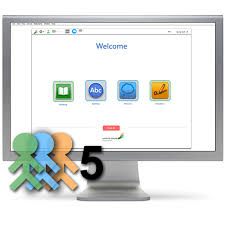
One of the positive of the positive aspects of Nessy is that it offers a Dyslexia Screener that identifies a child's strengths and weaknesses through a series of games.  This is a good starting point for knowing what you are dealing with.


The Nessy Webpage is full of useful advice for parents and educators which is easy to read and reassuring. 

They have created an excellent book which can be downloaded or bought called 'Dyslexia Explained'. The dyslexia journey is a long one and it takes time to for interventions to have real impact. This can be very stressful for all involved, so having clear information is empowering for parents and it can help them to communicate with schools and teachers with confidence.  There is also information that can be shared with the child themselves as and when the parent feels it is appropriate.


There many interventions and tutoring opinions available but many are very expensive and require a lot of additional time after school. Nessy Reading and Spelling program is based on Orton Gillingham which is considered to be one of the best approaches for dyslexic children.  It is fun, structured, reasonably priced and requires about 80 minutes per week.  When the child starts the program they do a placement test which sets lessons and activities suited to the child's level. Once they have progressed through their targets the computer will reassess and set new targets.  It can be used by schools and parents at home. Nessy currently offer a free trial so you can see for yourself if suits your child.
 

There are animations which teach sight vocabulary and spelling patterns, then games and activities to reinforce these.


In addition Nessy offer a range of apps  - Hairy Phonics, Hairy words, Chimp Fu and Dyslexia Quest.


And maths interventions


Wednesday, 30 August 2017

My top ten resources for dyslexic learners


 1. Stile Trays
A very versatile resource which allows 
children to practice their skills without writing. They are self checking so a child can work independently. This can be a real confidence boost!
                                                                                     

2. Alpha to Omega  
A structured spelling programme best used with the alphabet arc and magnetic letters.  Children work systematically through letter patterns and only write words that they have already practiced with magnetic letters.  The dictation sentences are carefully constructed to allow children to aim for accuracy and success.


3. Units of Sound computer program. A very effective way of systematically learning and practicing letter patterns or 'units of sound'. It constantly revisits previous letter patterns helping them to be retained.  There are memory and dictation sections which help to develop memory skills. It is now available online which allows it to be used at home as well as at school.


 4. Toe by Toe
This is still the most effective way to improve the reading skills of anyone who is struggling.  Best used everyday for 5 -10 minutes (3 times a week can still be effective.) It systematically works through letter patterns starting with alphabet sounds and 3 letter words building up to polysyllabic words. At every stage the phonic skills are practiced with nonsense words and in carefully constructed sentences.


 5. Smart Phonic magnetic letters
These magnetic letters are joined together to make common digraphs particularly vowel digraphs. Many dyslexics learn best in a kinaesthetic way and these letters make letter patterns explicit.  Great for word building and making sets of words with the same pattern. They can be used to make Alpha to Omega word lists.


 6. Gel Boards seem to be an under used resource. Many dyslexics find letter formation and pencil control difficult. Gel boards are an excellent and fun way to practice handwriting patterns and letter formation. If you press too hard the marks do not show properly so it is a good way of training children not to use too much pressure when they write.


 7. Word Shark
Great interactive games which can be set to match the letter pattern a child is working on.
Children can work on 3 letter words right up to more complex prefixes and suffixes.


 8. Nessy Learning, Hairy Phonics and Hairy Words
Really fun interactive games and apps. The Nessy Learning Programme can form the central part of any intervention plan. It has a reading and spelling challenge to set the correct level. It then provides memorable video animations for each letter pattern. There are games and worksheets to allow practice in lots of different ways.


 9. Wellington Square Books
Many teachers think that these books are a bit outdated, but in my experience the children who read them really enjoy them. Aimed at Junior age children who are still in the early stages of learning to read. All the books are carefully graded to only introduce a few new words at a time (in a similar way to Oxford Reading Tree).  The support materials are excellent and provide a wide range of activities to support early comprehension skills.


 10. Active Literacy Kit
A little known resource available from Dyslexia Action.  It is excellent at pinpointing weaknesses in children who are slow to develop their literacy skills. Each child has their own combination of activities to strengthen their skills. It works on the alphabet sequence, auditory discrimination, reading fluency and spelling. Very easy for both teaching assistants and teachers to use.

Monday, 14 August 2017

Recommended resources: Stile trays - so versatile!


One of my favourite resources are Stile trays. In most of the schools I have worked in I have found that they are an under used resource. Mainly because many teachers do not know what they are for or how they work.

Stile trays are very appealing to children of all ages and abilities. Here's why.....
  • they feel like a game or a puzzle rather than work
  • there is no writing involved, a huge relief for dyslexic students
  • there is a clear beginning and end, great for autistic students
  • they are short activities
  • they focus on one skill at a time
  • they can be completed independently and are self checking - this is very rewarding for a student who always needs help
  • they cover a wide range of topics and cater for different ability levels
There are Starter Stiles designed for 4 to 7 year olds


And there are original Stile trays for 7 -12 year olds (but they could be used with older students if appropriate)


Available from LDA   www.ldalearning.com or www.findel-education.co.uk